Why do you train?
It's a good question. I think it is, because there's no doubt that for every person training, there is a reason personal to them. What does Aikido offer that say Karate or Judo doesn't? What makes it different enough to consider trying out?
Chasing Aikido
For myself, the answer was easy. From the moment I experienced my first class, almost fifty years ago now, something within it inspired me to explore it more and more. I couldn't name it then. I'm not sure I can name it now. But I chased after it anyway, initially commuting from north to south London and then eventually ending up in California in the 80s and 90s to train with one of the great pioneers of Aikido, Chiba Sensei. That journey has been extraordinary, expected ups and downs, frustrations and successes, plateaus that felt like walls and breakthroughs that came from nowhere. But I have never once wished for a trophy.
There were no titles or trophies to be gained
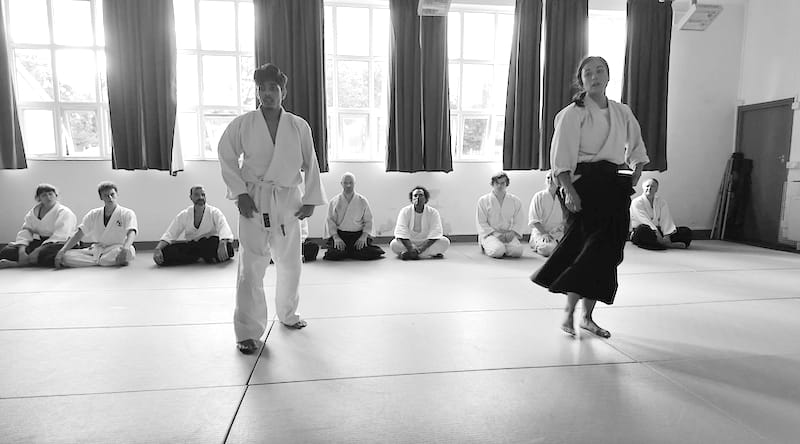
There were no titles or trophies to be gained. Even the belt system associated with Japanese martial arts differed in Aikido. No colours to denote one's position here. All practitioners wear a white belt until they reach black belt. Only then does a hakama, the samurai's skirt-like trouser, appear to indicate seniority. So what motivates people to commit their time to this unique martial practice? What kept ‘me’ coming back, decade after decade?
Learn the rules then break them
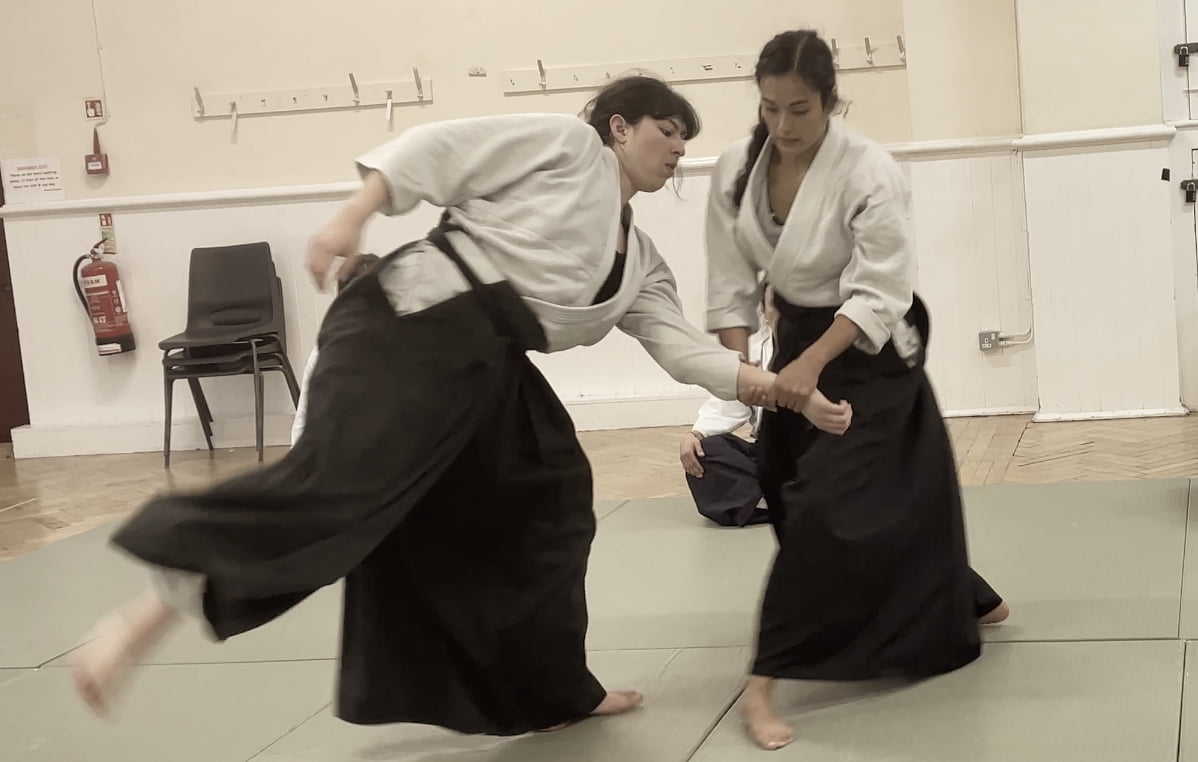
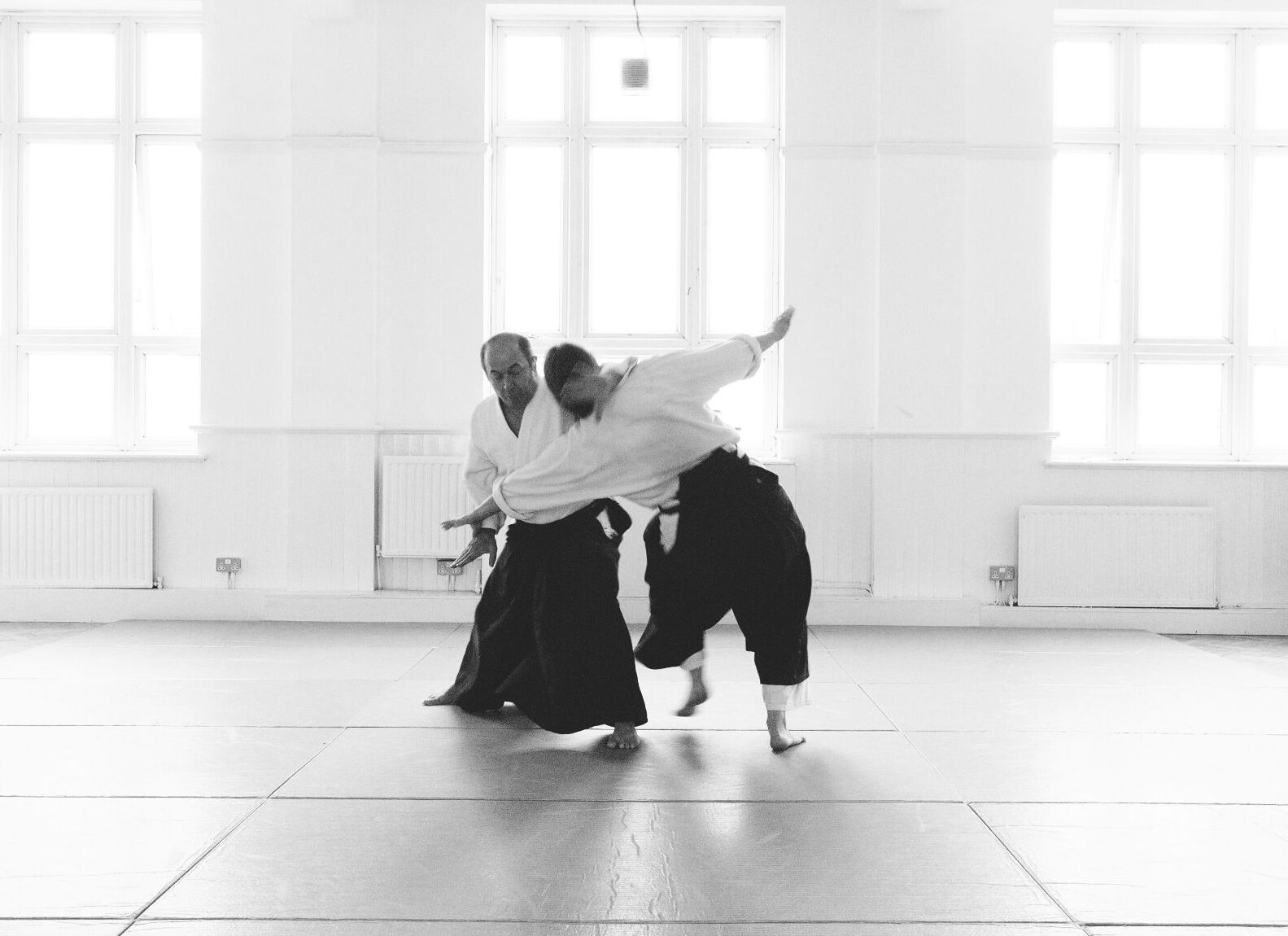
Aikido is unusual in appearance, even eccentric when compared with most other systems. The attacks are mostly wrist and sleeve grabs, or strikes that loosely resemble a sword cut to the temple or top of the head. That alone makes it idiosyncratic. It is, for the most part, defensive. You get attacked, and then you apply one of the many pins, locks, or throws. In many ways, Aikido is constrained by its most basic set of training principles, which seems like a limitation. But working within those principles is where the magic comes from. The freedom of movement, the coordination, the timing, the ability to project powerful throws, all of it grows out of that structured learning.
Seeing changes
To see new people, beginners, adults, children, evolve and change through the training is the raison d'être of any instructor dedicated to teaching. I have watched students struggle in the beginning, only to overcome their difficulties when the time was right. I have watched others start fast, full of promise, only to get stuck, just like most of us do. They reach a plateau that can be frustrating the longer it lasts. This is usually when the deepest changes are taking place, even if it doesn't feel like it. It takes time. It takes patience. But above all, you must ‘want’ it in order for progress to take hold.
We live in a time of immediate reward. Smartphones, social media, the internet, and now AI have brought the world to our fingertips. Not only is it instant but constant. The tatami, however, is a very different world. People watch the videos and make various assessments, but it is in the ‘doing’ that you get to experience what Aikido has to offer. That first awkward fall. The body feeling torqued and twisted in new and sometimes uncomfortable ways. It can be a rude awakening. ‘Why am I putting myself through this?’ is a fair question. Many beginners genuinely enjoy the trial session or a short workshop. The following morning, when they wake up, is a different matter. Stiff. Sore. Feeling like they've been worked over by someone who knew exactly what they were doing. ‘Do I want to go back for more?’
Patience
It takes time. The body and mind need to adjust. And in time, the discomfort becomes background noise, replaced by the positives of this incredible system of training. The body changes, becoming more resilient. The mind can also change, learning to observe on the fly, seeing details, recognising movement. You develop skill, technique, strength, and flexibility, all in motion. I have to say, it is tough sometimes. But it is also inspirational. There are highs and lows, but above all, there is enjoyment. Discipline without enjoyment makes no sense, just as enjoyment alone is not enough. I learned that from Chiba Sensei. I am still learning it.
Discipline without enjoyment makes no sense, just as enjoyment alone is not enough.
There will be no trophies, no medals, no competitions. There are little to no sponsors and no significant financial rewards. Winning, in Aikido, will be how effectively you train with other people for mutual gain. Collaboration without losing a serious approach is the key. Some will attain useful skills in practical situations. Anchoring your mind and body in the midst of it all, when someone larger and faster is coming at you, or when life off the mat feels just as chaotic, that is a great goal to achieve. These changes carry over into the wider world we all live in.
Above all, the reward is the training itself.
That has been true for me for nearly fifty years. And I suspect it will be true for anyone who steps onto the tatami with an open mind and stays long enough to take their first real fall.